


Helminthiases are a large group of parasitic diseases caused by certain types of parasitic worms - helminths.Most helminthiases have similar clinical manifestations and therapeutic approaches.
Parasites: from Antiquity to the present day
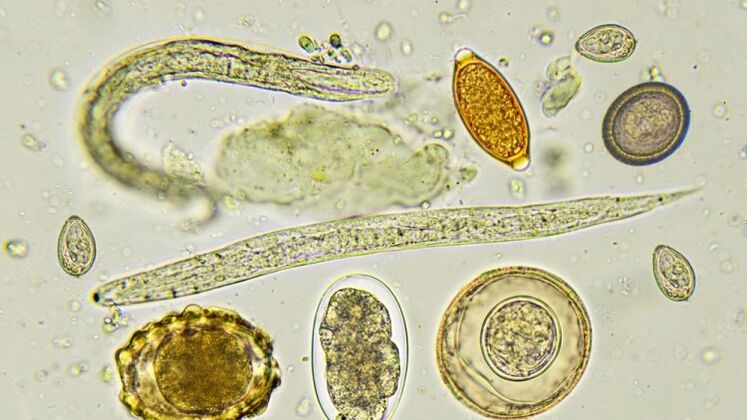
Such common helminthiases as enterobiasis and ascariasis have long been known.Human invasions of bovine tapeworms and roundworms were mentioned as early as the 16th century BC in the ancient Egyptian medical treatise - the Ebers Papyrus.Hippocrates himself paid great attention to helminths.It was they who introduced such concepts as "helminthiasis" and "ascariasis".
At the beginning of the 18th century, the German microbiologist Karl Rudolphi, while studying a large number of animals, collected a whole collection of parasitic worms.Soon the science of parasitic worms appeared: helminthology.
In one thousand eight hundred and eighty-four, a famous scientist and doctor established a causal connection between tapeworm parasitism in the human body and the appearance of anemia in the patient.
An outstanding scientist and academician made a great contribution to the development and establishment of helminthology, organizing the first department of parasitology and opening specialized institutions dedicated to the study of helminths.On his initiative, more than three hundred parasitological expeditions were carried out, in which he directly participated.
Parasitologists have described more than five hundred species of parasitic worms previously unknown to science.The doctor himself discovered and described more than two hundred new species of helminths, and also published more than seven hundred scientific articles.
By the way, it is known that parasitic infection aggravates the course of concomitant diseases, especially chronic and decompensated diseases.Helminth infections negatively affect growth, the ability to work, and also have a depressing effect on the human immune system and nervous system.
Parasitic infection: types of worms
There are three main classes of helminths: tapeworms (cestodes), roundworms (nematodes) and flukes (trematodes).Nematodes are classified as roundworms, while tapeworms and flukes are classified as flatworms.A person can act as an intermediate or definitive host of parasites.
The causative agents of helminthiasis such as ascariasis, enterobiasis, trichinosis, hookworm, trichuriasis and strongyloidiasis are nematodes.Cestodes cause echinococcosis, alveococcosis, diphyllobothriasis, taeniasis, teniarinchiasis, hymenolepiasis, etc.And trematodes cause, among others, opisthorchiasis, clonorchiasis, paragonimiasis, metagonimiasis, fascioliasis.
Depending on the location of parasites in the body, we distinguish:
- Luminal helminthiases.
- Tissue helminthiases.
- Hepatobiliary helminthiasis.In this case, the parasitic infection affects the liver, gallbladder and bile ducts (opisthorchiasis, clonorchiasis).
- Pulmonary helminthiasis.
The following types of helminthiasis are distinguished:
- Geohelminthiasis.In this case, the parasite develops with the participation of a non-living substrate (water, soil).
- Contagious helminthiasis.The development of worms occurs within a single microorganism, as in enterobiosis.
- Biohelminthiasis is the development of helminths with the participation of intermediate hosts.A typical example is the broad tapeworm, which has a complex development cycle with a change of host.
By the way, it has been established that intestinal parasites present in the body promote the release of Th2 cytokines, which suppress the Th1 cytokine.In this regard, people with helminthic infestations are at higher risk of being infected with a particular disease, for example, tuberculosis.
Parasites in the body: main syndromes

The main clinical syndromes of helminthic infections include:
Malnutrition syndrome
It is known that the parasite, when in the human body, consumes nutrients from its host, which can cause the latter to develop protein-energy deficiency, hypovitaminosis and anemia.This often occurs when the body is damaged by tapeworms and roundworms that parasitize the intestines.
Immunosuppressive syndrome
When remaining in the body for a long time, helminths can have an immunosuppressive effect, reducing resistance to various microbial and viral infections.
Toxic and allergic organ damage
This concerns a whole spectrum of diseases: the heart (myocarditis), the liver (hepatitis), the lungs (pneumonia), the brain (encephalopathy).Up to hemorrhagic necrotic damage to internal organs.
Local damage to organic tissues
Most often, it predominates in the chronic phase and is determined by the localization of helminths.So, hookworms and cestodes have a traumatic effect on the intestinal mucosa, opisthorchids damage the bile ducts, and schistosomes damage the mucous membrane of the large intestine and urinary tract.
By the way, helminth infections have been proven to reduce the effectiveness of vaccination.Some helminths, for example, schistosomes, opisthorchids, Chinese flukes, can provoke the development of carcinogenesis.This is demonstrated by the so-called parasitic theory of cancer.Particularly dangerous is long-term chronic opisthorchiasis, which can ultimately lead to bile duct cancer.
When should you consult a doctor?

The following may indicate that a person has parasites in their body:
- Various types of allergic reactions, including recurrent unspecified urticaria, which do not disappear even with the use of hormonal and desensitizing drugs.
- Decrease or, conversely, increase in appetite.
- Exhaustion of the body.
- Itching in the anal area - especially in the evening or at night.
- Dyspeptic phenomena.
- Unstable stools - diarrhea or constipation.
- Prolonged dry cough (usually at night), in children - a prolonged “barking” cough.
- An increase in the level of eosinophils in the blood is called eosinophilia.
- Anemia, especially vitamin B12 deficiency.
- Asthenic syndrome - general weakness, fatigue, malaise.Of course, these symptoms can be attributed to various diseases.However, if the child has an incomprehensible increase in fatigue or mood swings, poor night sleep or nervousness, it makes sense to carry out a test for parasites.
If any of the above signs are present, this is a reason to consult a parasitologist or infectious disease specialist.